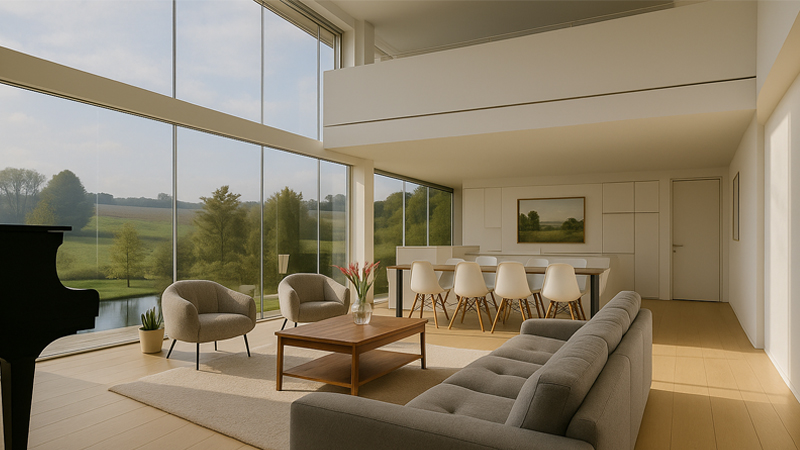
The problem with trend culture is not that styles circulate quickly. The problem is that buildings begin to be judged primarily by how quickly they communicate affiliation. Once that becomes the dominant measure, the space itself becomes secondary to the image of participation.
1. Novelty is not the same as relevance
A project can feel current without becoming disposable. Relevance comes from reading the problem clearly, not from imitating whatever aesthetic language happens to dominate reference boards that season.
2. Materials need time to become themselves
Trend-driven design often treats material as surface rhetoric. Architecture should treat material as something that changes, settles, and carries weather, maintenance, and touch. That takes a longer imagination than trend culture usually allows.
3. The strongest projects simplify before they decorate
When the core order of a project is strong, the work does not need to perform nervous originality at every turn. It can afford quiet. It can let people discover it over time.
That is the kind of architecture I find worth making now: work that can sit inside culture without being swallowed by its acceleration cycle.