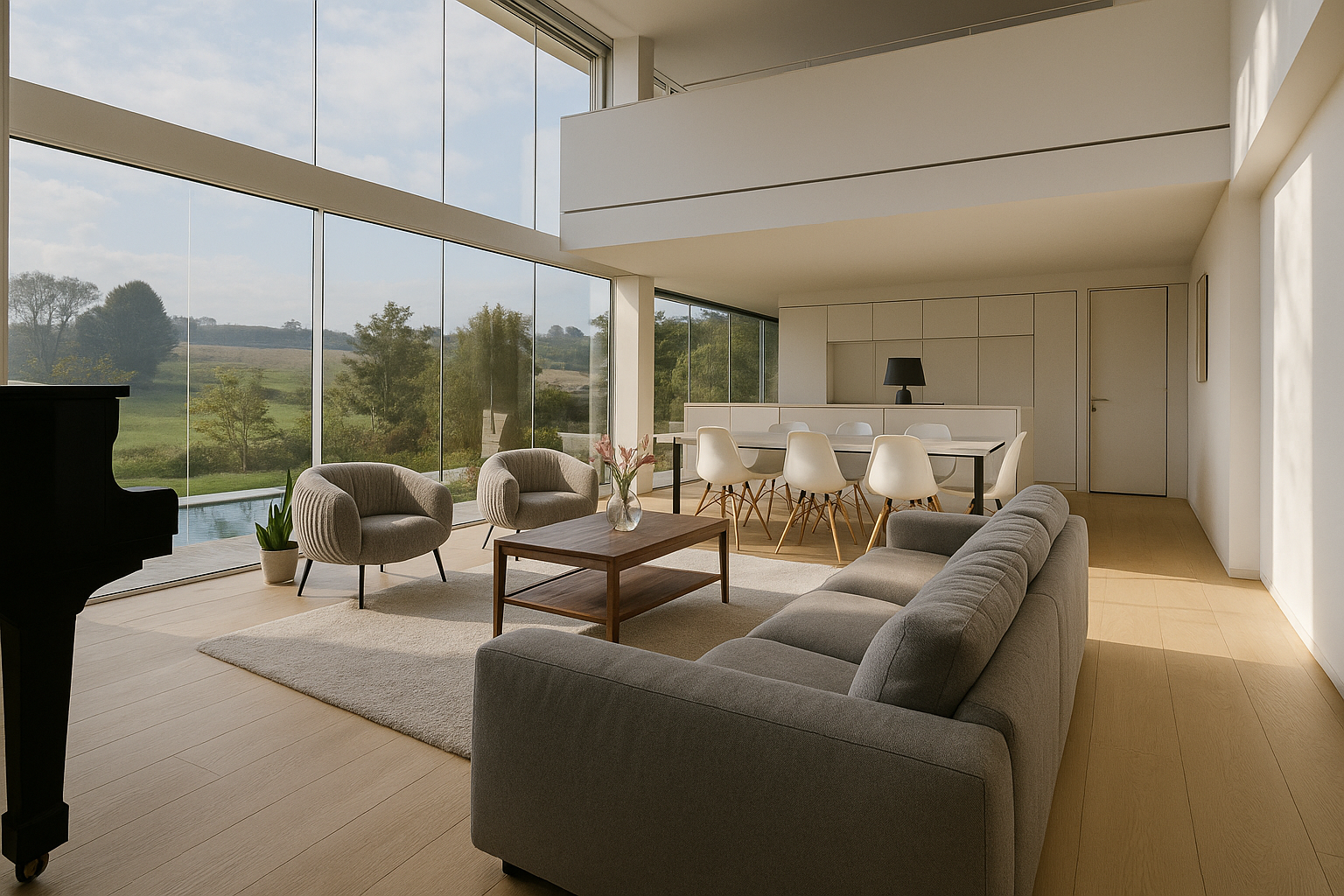
A meaningful home is usually organized around rhythm rather than display. It understands how morning begins, where silence matters, how light should arrive, and which spaces need to hold conversation without forcing it. These things are subtle, but they are what people remember once the novelty of a project disappears.
1. Proportion affects emotion
Many people speak about materials first. I tend to think proportion arrives earlier. Ceiling heights, room depth, the width of thresholds, and the distance between one activity and another shape how the body relaxes or resists. Expensive materials inside poor proportion rarely produce calm.
2. Routine should be legible in the plan
A home becomes meaningful when the plan acknowledges the life actually being lived there. If the family reads in the evening, cooks together, or needs quiet separation between work and rest, the architecture should not force those routines to happen despite the house. It should help them happen with less friction.
3. Restraint gives memory somewhere to settle
Meaningful spaces leave room for the life inside them. When every surface performs for attention, nothing can deepen. Restraint is not emptiness. It is an architectural form of respect. It lets a few gestures carry real weight.
That is why I am interested in homes that feel composed rather than decorated into submission. Calm is not a visual style. It is the result of many small decisions that stop competing with one another.